Jürgen Habermas (1929-2026): In Memoriam
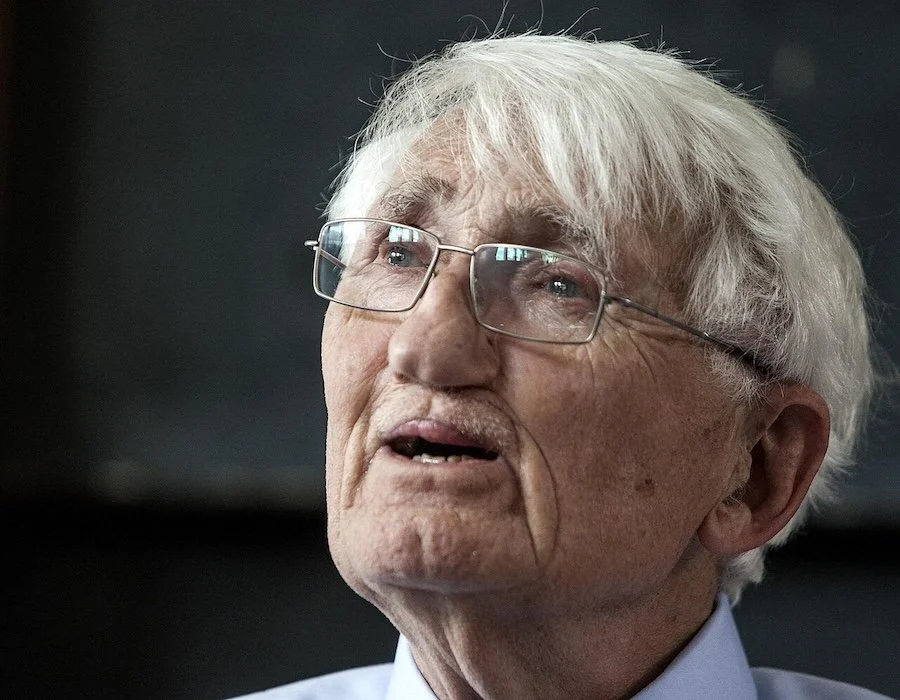
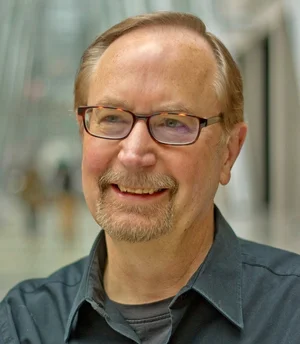
Jürgen Habermas, 2014. Photo from Európa Pont, via Wikimedia Commons.
The world’s foremost social philosopher has died. Born in 1929, a few years before the Nazis took over Germany, Jürgen Habermas died on Saturday, March 14, at the age of 96. Of the many obituaries published in the past few days, I recommend those which appeared in The Guardian and The New York Times. They give substantial surveys of Habermas’s life, and they show why his work is so significant, especially during the dark times we now inhabit.
My own tribute will take a different tack. I want to reflect on what I’ve learned from Habermas and why I continue to study his writings. Unlike some colleagues who work on Habermas and Critical Theory, I never studied with him. But I did write my dissertation on Theodor Adorno, Habermas’s mentor (see the blog posts titled Hope for Truth and Fascism, Resistance, and a Crisis of Faith). Subsequently I enjoyed three-month research visits to Berlin (1994) and Frankfurt (2001) sponsored by Albrecht Wellmer, Habermas’s close colleague, and Axel Honneth, Habermas’s successor in social philosophy at the Goethe Universität in Frankfurt.
In addition, from the mid 1990s onward I’ve hung out with the Habermasians, so to speak, at annual meetings of the Critical Theory Roundtable, which originally centered around Thomas McCarthy and his students. McCarthy’s teaching, writings, and translations have been crucial in bringing Habermas’s work to an English-speaking audience. I met and spoke with Jürgen Habermas at some of these meetings. I’ve also participated in international Philosophy and Social Science conferences in Prague, annual gatherings that Habermas and Gabo Petrovic began in the early 1990s.
So it’s no accident that the first master’s thesis I supervised was on Habermas’s two-volume The Theory of Communicative Action. Or that a graduate seminar I regularly offered at the Institute for Christian Studies and the University of Toronto examined those same two pathbreaking volumes. It was titled “Paradoxes of Progress: Habermas’s Theory of Communicative Action.”
Social Transformation
Regular readers of this blog know I care deeply about the prospects for social transformation. I continually ask how our society can better align with societal principles such as solidarity, stewardship, and justice and more fully foster the interconnected flourishing of all creatures. Linked to this desire to pursue society-wide love and justice lies a persistent worry about entrenched life-destroying patterns that stand in their way, patterns that together make up what a previous post called societal evil.
The potential pathway from resisting societal evil to fostering a good society is what I call differential transformation, a term mentioned in my blog post Free Universities and Systemic Chains. Briefly, I argue that fundamental changes need to occur within and across the many differentiated domains of contemporary society in order to achieve a better balance among them, align them with societal principles, and foster interconnected flourishing. Although this idea has roots in the reformational social philosophy of Herman Dooyeweerd and Bob Goudzwaard, I first formulated it in an essay on Habermas’s critique of Adorno’s social philosophy. The essay appears as chapter 4 in my book Social Philosophy after Adorno (Cambridge University Press, 2007), pp. 107-131. It’s titled “Globalizing Dialectic of Enlightenment.”
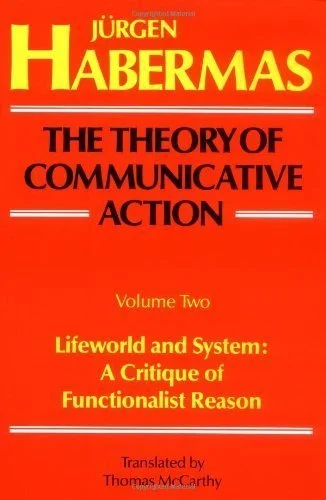
There I take issue with how, in The Theory of Communicative Action and other writings, Habermas interprets Adorno and Horkheimer’s controversial classic Dialectic of Enlightenment. Although Habermas is right to criticize Adorno for ignoring how the modern differentiation of social domains can promote human flourishing, he does not really address the systemic violence that Adorno diagnosed in late capitalist society. Moreover, neither Adorno nor Habermas provides a hopeful vision of how such violence can be overcome. I propose the idea of differential transformation as an alternative vision—one that incorporates insights from both Adorno and Habermas but takes these in a different direction.
The Critical Theory Roundtable’s annual meeting in 2009, held in New York, included a panel discussion of Social Philosophy after Adorno. Jürgen Habermas was there. The evening before the conference began, we gathered in Nancy Fraser’s apartment to celebrate his eightieth birthday. I talked with him a couple of times during the next few days and mentioned that my new book raised questions about his critique of Adorno. Habermas replied, I’ve gathered that. I need to read your book.
That is who he was. A formidable intellectual whose books combine relentless research with systematic rigor, he was ever gracious. And he was eager to learn from others, even as he fearlessly defended the universal values of justice, truth, and democracy that too many scholars have abandoned. My own insistence on honoring societal principles owes much to his example.
Truth

Many other topics in my social philosophy have benefited from Habermas’s work. Here I think of the need to develop a critical understanding of the societal macrostructures—economy, polity, and civil society—that organize contemporary social life. Also, why a not-for-profit economic sector and an intact public sphere are crucial for a democratic society. I address all of these topics, along with the idea of differential transformation, in my book Art in Public: Politics, Economics, and a Democratic Culture (Cambridge University Press, 2011). It frequently cites Habermas’s work.
But let me turn to another area where I’ve found his contributions indispensable, namely, in my work on the idea of truth. As in social philosophy, so in truth theory Habermas has helped me reconceptualize insights that I learned from studying Adorno’s writings, especially his posthumous Aesthetic Theory (1970) and his magnum opus Negative Dialectics (1966). The first of these I examined in Adorno’s Aesthetic Theory (MIT Press, 1991); the second, in my more recent Adorno, Heidegger, and the Politics of Truth (SUNY Press, 2024).
Habermas’s contributions show up twice in my book Artistic Truth (Cambridge University Press, 2004). First, in a chapter titled “Kant Revisited” (pp. 55-73), I use his theory of communicative action to explain how people raise claims to aesthetic validity when they talk about art. Then, in a chapter titled “Artistic Truth” (pp. 118-139), I use his distinction among three types of validity claims as a clue to three relationships that make up truth in art. I distinguish these as authenticity, significance, and integrity, and I give an account of each. That allows me to incorporate Adorno’s insights into artistic “truth content” (Wahrheitsgehalt) while rejecting his tendency to restrict this to certain works of fine art.
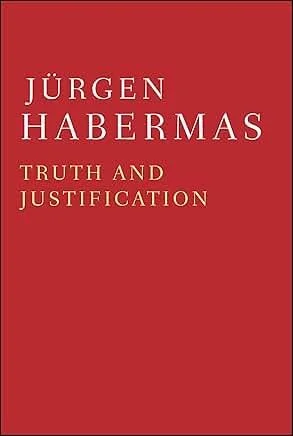
Habermas has also helped me think through the nature of propositional truth (i.e., the truth of beliefs, assertions, propositions, etc.). Here his most important book is Truth and Justification, which I discuss in chapter 5 of Truth in Husserl, Heidegger, and the Frankfurt School (MIT Press, 2017). Although I don’t agree with every detail in Habermas’s account, I argue that he offers a way to break through an impasse in much of Anglo-American philosophy about how to explain propositional truth. This breakthrough plays a key role in my subsequent book Social Domains of Truth (Routledge, 2023), where I give a detailed account of propositional truth and show its relation to truth as a whole.
Religion and Philosophy

In 2022, not long after I finished writing Social Domains of Truth, I had the privilege of carefully reading Auch eine Geschichte der Philosophie, Habermas’s last massive work. Divided into two volumes and totaling more than 1700 pages, it first appeared in 2019, the year Habermas turned 90. It has subsequently been published as a three-volume translation titled Also a History of Philosophy (Polity Press, 2023-2025). In this work Habermas traces the relation between faith and knowledge since ancient times. He reconstructs this history in order to argue that the interaction between Christianity and Greek philosophy has generated the West’s most important achievements, including modern science, moral universalism, and political democracy.
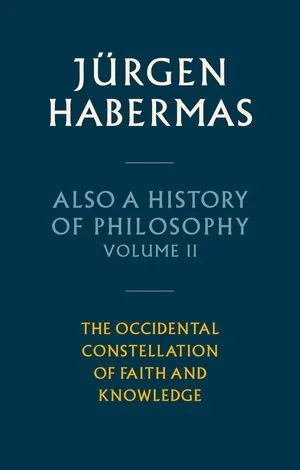
I’m currently rereading Habermas’s history, in English this time, hoping to understand better why we’ve arrived at a society where white nationalists weaponize Christianity into a vehicle of hatred and philosophers cast doubt on Enlightenment ideals such as universal truth and justice. Habermas’s late-blooming reflections on faith and knowledge could prompt me at last to begin writing the book I’ve long felt called to write. It would explore what the world’s religions can offer for an Earth-sustaining and life-giving global ethic.
If health permits, I might finish this project by the year I turn 90. That would be a parting gift. And it would largely be inspired by Jürgen Habermas, the genial and committed social philosopher who neither dismissed religion nor turned his back on the unfinished project of Enlightenment. May his memory be a blessing.
Note: I notify a list of readers when a new blog post is published. If you’re not on that list and wish to join us, please let me know via the Contact button at the top of this page.
.jpg)