Fascism, Resistance, and a Crisis of Faith
When Joyce and I moved to West Berlin in September 1977, we found housing at the Protestant theological seminary called the Kirchliche Hochschule Berlin (KiHo for short). We lived in a tiny apartment at KiHo’s Studentenwohnheim (dormitory) for nearly three years, while I attended seminars at the Freie Universität (FU—Free University) and wrote a doctoral dissertation about Theodor Adorno’s philosophy of the arts. (I’ve described this research and its outcomes in a blog post titled Hope for Truth.)
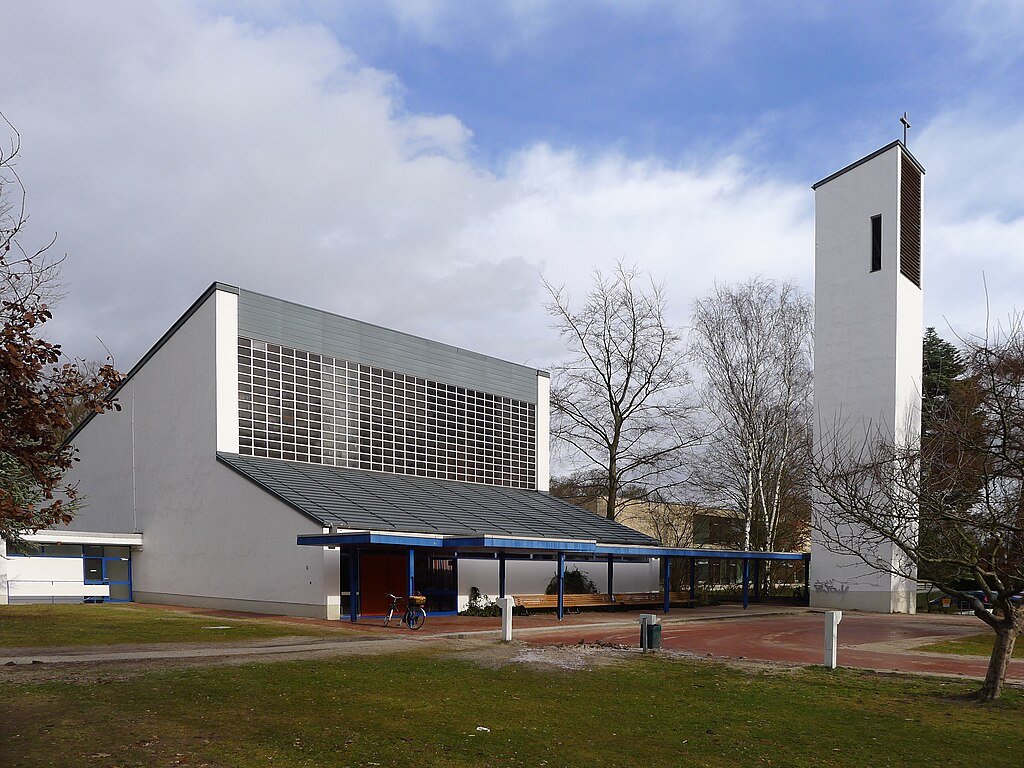
Kirche zur Heimat on the campus of Kirchliche Hochschule Berlin. Photo by Bodo Kubrak, via Wikimedia Commons
Living on campus, we attended services and concerts at the campus church called Kirche zur Heimat; regularly had lunch in the student Mensa (cafeteria); and, in my case, also attended a few seminary courses on Hegel and Nietzsche. Yet I don’t think we understood the history of this unique school. I do remember one occasion when a bust of Dietrich Bonhoeffer, the martyred leader of Protestants who opposed the Nazis, was dedicated in the main academic building. But I didn’t realize the school itself arose from opposition to fascism, from resisting both the Nazi takeover of academic institutions and the complicity of many Christians with the Nazi regime.
School Founded in Resistance
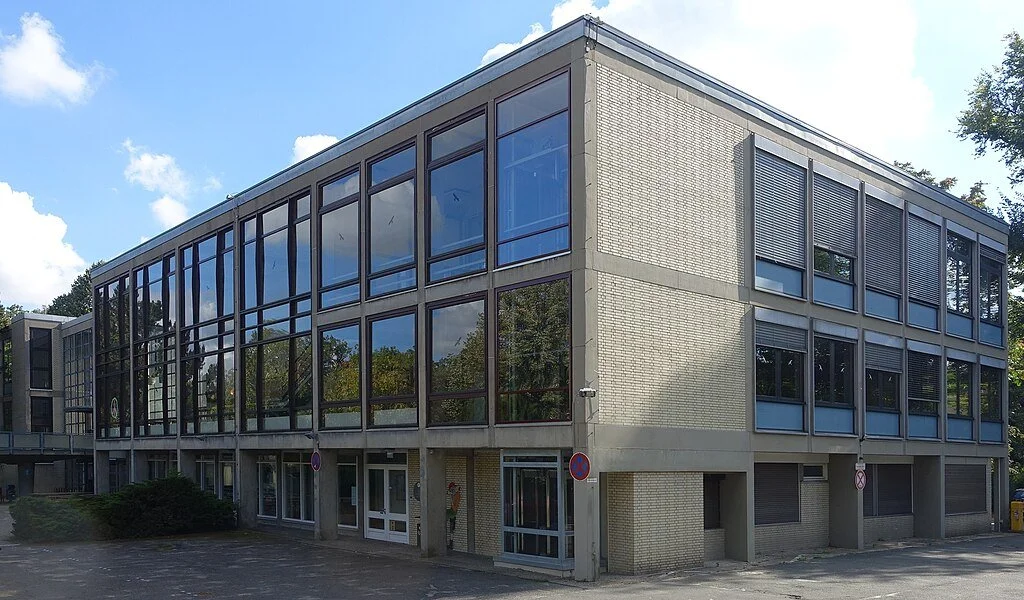
Main academic building, Kirchliche Hochschule Berlin. Photo by Bodo Kubrak, via Wikimedia Commons
The school was founded in 1935, two years after Hitler came to power, at the initiative of Martin Niemöller. Like Bonhoeffer, Niemöller was a prominent member of the Confessing Church that opposed the Nazification of German Protestant churches. He was a pastor in Dahlem, an affluent sector of Berlin where the FU is currently located. Dahlem borders a more southerly area called Zehlendorf, where we lived on the KiHo campus. Hence the school’s original name: Kirchliche Hochschule für reformatorische Theologie, Abteilung Dahlem (Church University for Reformational Theology, Dahlem Division).
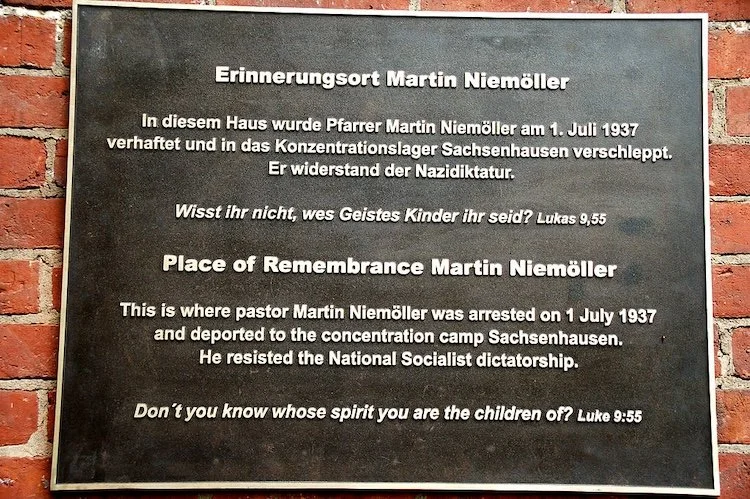
Remembrance plaque in Berlin-Dahlem. Photo by Berkan via Wikimedia Commons.
Niemöller and his colleagues founded this school in resistance to the Nazis’ dismantling theological faculties at state universities, most notably one in Bonn led by Karl Barth. Then the Nazis promptly banned the Kirchliche Hochschule itself, that same year. Yet the school carried on illegally, in Zehlendorf, until 1941. By that time Niemöller had already spent three years imprisoned in Nazi concentration camps, where he would remain for another four years. The school reopened shortly after World War Two ended in 1945.*
I’ve found a two-minute video clip from the KiHo’s 25th anniversary in 1960. Be sure to watch it; the German narration briefly tells the history I’ve already shared. The opening scenes begin inside Kirche zur Heimat, the campus church, and then they move outside to the dormitory where Joyce and I lived. Both buildings were constructed just a few years before this film was made. Toward the end we see construction work for the library where I often studied. Like the Kirche zur Heimat, this library was designed by Peter Lehrecke. A leading church architect in postwar Germany, Lehrecke was profoundly influenced by the theologian Eberhard Bethge, himself the close friend and biographer of Dietrich Bonhoeffer.
Letters from Prison
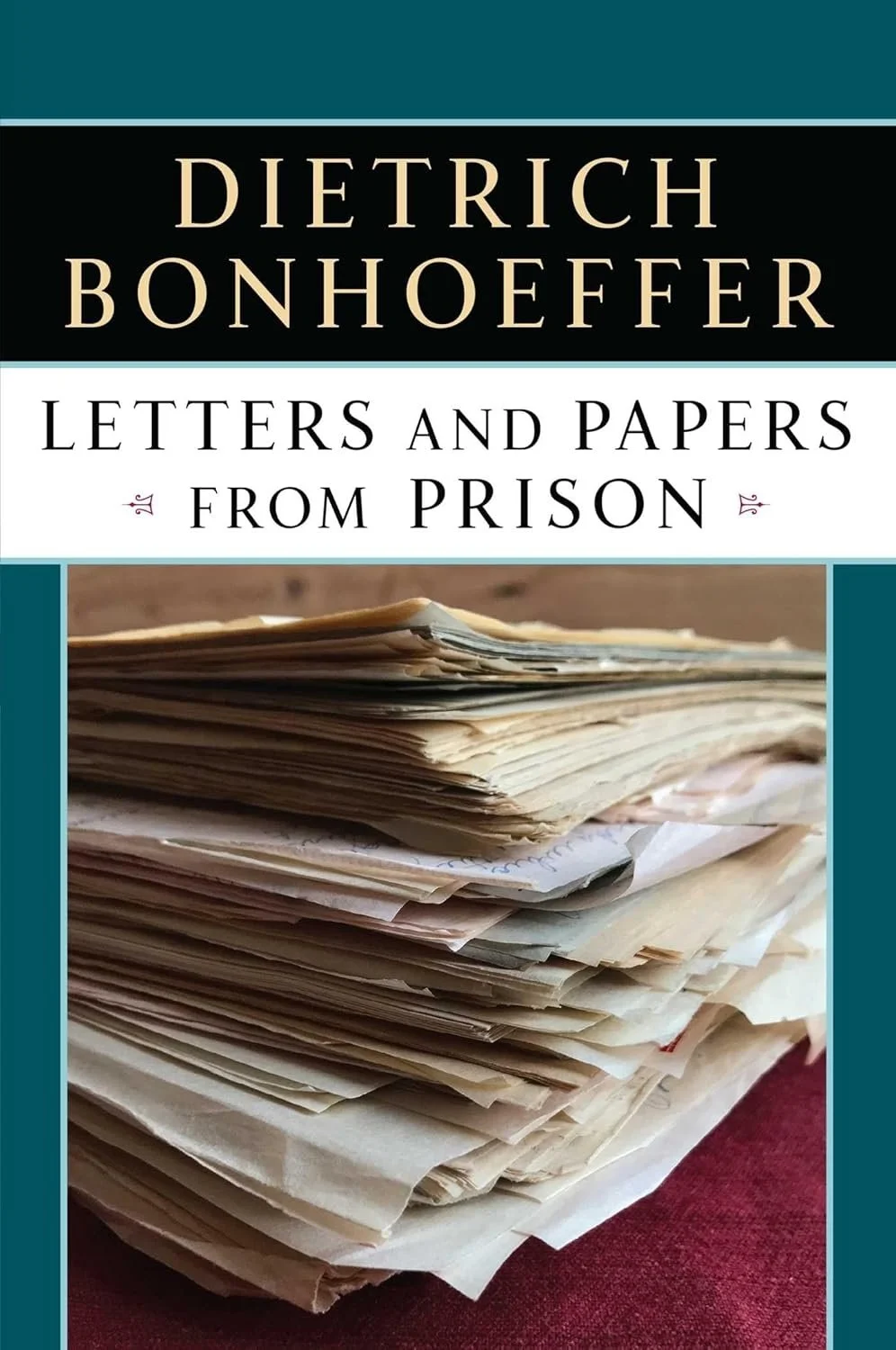
Living in a dormitory, Joyce and I befriended fellow students there, especially Cindy, Peter, and their little boy Benjie. Cindy was studying theology at the FU, and Peter, at KiHo. I think of this because I recently pulled a book off the shelf that I hadn’t looked at in years: Bonhoeffer’s Letters and Papers from Prison (Macmillan, 1972), edited by Eberhard Bethge. The inscription inside reminds us it was a gift from Cindy, Peter, and Benjie for Joyce’s birthday in April 1979.
Last week I read this book from cover to cover. Why? Because recent events in the United States, where I grew up and remain a citizen, have severely shaken my spiritual compass; I need help finding reorientation from someone who lived through a similar crisis and reflected deeply about it.
I can’t say recent events surprise me: The congressionally unauthorized military invasion of a sovereign country (Venezuela). Bullying maneuvers to seize Greenland from Denmark, a close partner, and thereby blow up the NATO alliance. The threat of 100% tariffs on Canada, America’s neighbor to the north and second most important trading partner—no doubt because Prime Minister Mark Carney, speaking to the World Economic Forum in Davos, Switzerland, finally called a spade a spade. The unjustified murder of two American citizens in Minneapolis by swarming ICE thugs, many of whom are being recruited from white supremacist circles, as a recent CBC news segment documents. The Trump administration’s blatant lies about these events, and its vicious verbal attacks on the victims and on anyone who protests its policies and actions.
I’m not surprised because, historically, that’s how fascists operate. As I’ve said before, with its Christian white nationalist ideology and its disdain for constitutional democracy and the rule of law, the Trump administration is fascist to its core. So I’m not surprised. Yet, in the wake of Renee Nicole Good and Alex Pretti’s violent deaths at the hands of supposed law enforcement officers, I’m wondering again how we citizens have let this happen and how we should respond.
Personal Crisis

Dietrich Bonhoeffer. Image by AldrianMimi, via Wikimedia Commons
These questions quickly become intensely personal, as they did for Dietrich Bonhoeffer. Modern-day fascists can’t take over governments and destroy democracies without support, whether reluctant or fervent, from people who consider themselves good Christians. Here we’re talking about the Protestant Deutsche Christen (German Christians) in Nazi Germany, for example, and white Evangelicals in Trumpist America.
For people of religious persuasion who oppose fascism, this creates a crisis of conscience. How can they consider themselves Christians when many others carrying that name, among them neighbors and relatives, support a political regime whose actions and ideology directly oppose the ministry and message of Jesus? When fellow Christians elect and enable a regime that practices hatred and worships power, what does a politics of love—love for God and neighbor—actually require?
Bonhoeffer and his colleagues broke away from the majority Protestant church to form an anti-Nazi Confessing Church. Bonhoeffer went even farther, joining the active anti-Nazi resistance movement. He spent his last two years in prison and concentration camps and was hanged by the Nazis shortly before World War Two ended. He was only 39 years old.
Religionless Christianity
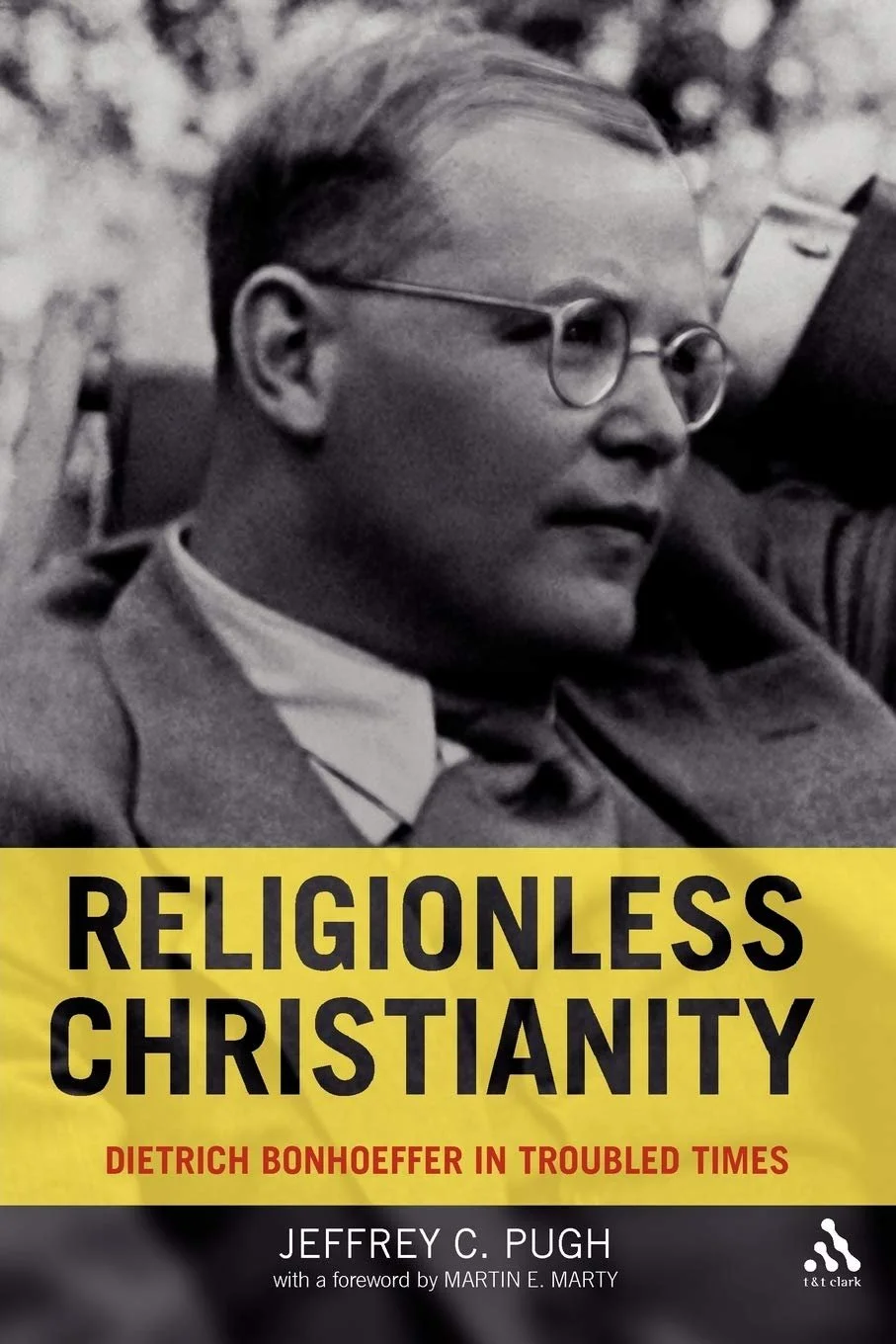
Bonhoeffer’s experiences and his theological reflections in prison led him to propose what he called a “religionless Christianity,” a phrase Jeffrey Pugh explains in his book by that title. Writing from prison in 1944 to his friend Eberhard Bethge, Bonhoeffer says: “What is bothering me incessantly is the question what Christianity really is … for us today.” His question arose because he thought society was moving toward a time when people “simply cannot be religious anymore” (Letters and Papers from Prison, 279). But it also arose because the church as he knew it had fundamentally betrayed the gospel of love.
As a result, Bonhoeffer ends up calling for a religionless Christianity, a “this-worldly” faith that lives “unreservedly in life’s duties, problems, successes and failures, experiences and perplexities” and thereby takes seriously the “sufferings … of God in the world” (370).
This is bracing stuff. For people who have considered themselves Christians but are utterly repelled by false piety and a Christian white nationalist politics of hate, religionless Christianity might be the way to go. Still, I have a nagging question, and it’s one Bonhoeffer would have recognized. When self-identified Christians rally to a politics that is plainly anti-Christ, how can those who oppose it out of love for God and neighbor continue to call themselves Christians?
Another Name?
Let me be specific. I grew up in a Christian home. I’ve belonged to Christian churches my entire life, and I continue to attend weekly worship services and sing in the choir. All of my formal schooling and, until retirement in 2016, all of my work as a professor have been at Christian schools in the Reformed tradition. That’s where the deepest impulses for my work as a philosopher have taken shape, and that’s where I’ve felt most at home.
I have many colleagues and friends who either do not share my history or stepped away from the Christian tradition years ago. Yet I have consistently, some would say stubbornly, refused to surrender the religious sources to my own spirituality.
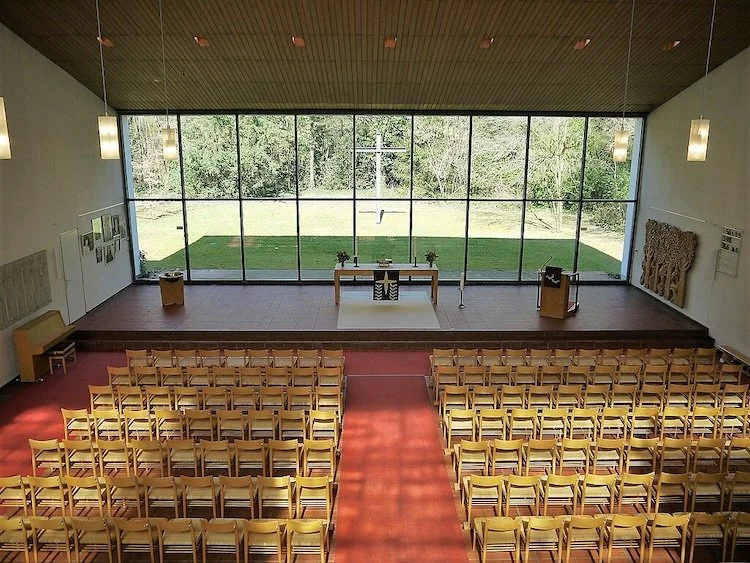
Interior of Kirche zur Heimat in Berlin-Zehlendorf. Photo by Wolfgang Reich, via Wikimedia Commons
Now, however, I’m not so sure. I’m not sure I want to be regarded as a Christian, in light of what others carrying that banner support. I’m not sure I can consider myself a Christian, given my opposition to what happens under that label. I remain committed to following the pathways of love and justice that Jesus pioneered. I expect many of my readers do too. But perhaps we need to find another name.
[*The Kirchliche Hochschule continued operating until 1992 when, following the reunification of Germany, it merged with the Faculty of Theology at Humboldt University (located in what had been East Berlin). Today the Zehlendorf campus houses the Evangelische Hochschule Berlin, a Protestant university for professional training in health, education, and social services.]
Note: I notify a list of readers when a new blog post is published. If you’re not on that list and wish to join us, please let me know via the Contact button at the top of this page.