What the Hell? Eschatology Reconsidered
Eschatology
Eschatology is the hidden minefield of American politics today. The MAGA faithful hope to reestablish the United States as a supposedly Christian nation, as many prayed at their “Rededicate 250” rally on May 17. There’s a subtext to their fervent religio-political prayer: anyone who opposes their vision for the future is on the wrong side and can rot in hell.
Others of us, however, wish Trump’s Evangelical supporters would “turn away from the politics of hate, resentment, and fear … toward a genuine pathway of love,” as I pleaded two years ago in Saving Democracy from Its Evangelical Foes. We too have a vision for the future that quietly motivates our political efforts. It’s time to unearth these contrasting visions.
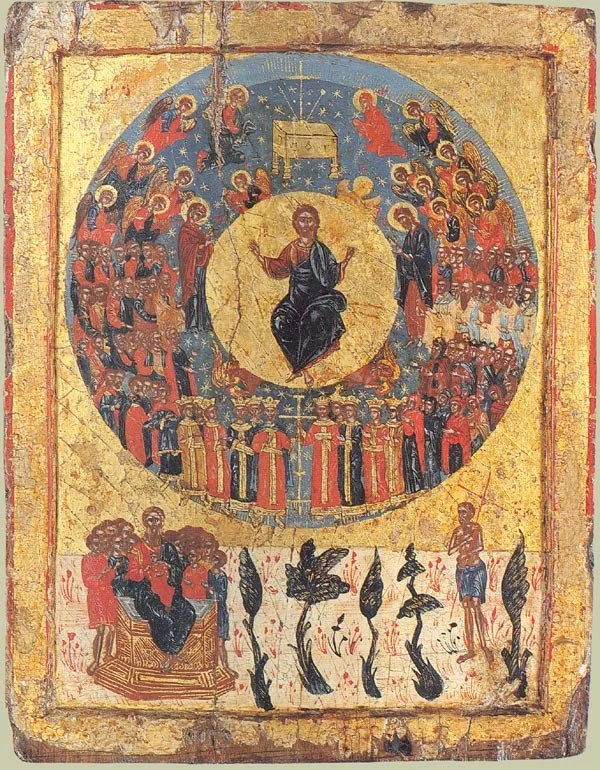
Greek icon of the Second Coming (ca 1700s). Anonymous, via Wikimedia Commons.
In traditional Christian theology, eschatology has to do with teachings about four “last things”: death, the final judgment, heaven, and hell. These aren’t topics most of us feel comfortable discussing. We find them foreboding or mysterious or downright depressing. Yet anyone who has grown up in or near a monotheistic religion has an informal understanding of them. And images of them abound in popular culture.
We’ve also absorbed many distorted and destructive eschatological notions. I’ve already discussed two of them: the supposed immortality of the soul, and a closely connected dualism between body and soul. Equally problematic notions abound concerning heaven, hell, and the final judgment.
Indeed, such notions litter both traditional Christian hymns and contemporary praise songs. So much so that, citing A. W. Tozer, J. Richard Middleton writes: “Christians don’t tell lies; they just go to church and sing them” [A New Heaven and a New Earth: Reclaiming Biblical Eschatology (Baker Academic, 2014), 29].
Double Dogmatism
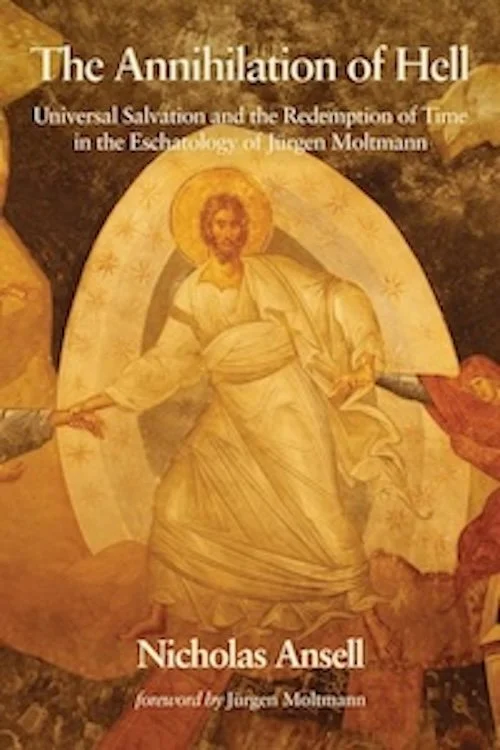
One topic in particular merits attention in the current political climate. It’s relevant, I believe, regardless of your religious tradition, spiritual orientation, or irreligion. I feel compelled to address it even though I lack theological expertise and normally write for a pluralistic audience. It’s the notion that some people will be—or already are—eternally damned to hell. In addressing this, I take cues from a wonderful book by Nik Ansell, my former colleague at the Institute for Christian Studies in Toronto, provocatively titled The Annihilation of Hell: Universal Salvation and the Redemption of Time in the Eschatology of Jürgen Moltmann (Cascade Books, 2013).
For the past century, Western Christianity has been troubled by what biblical scholar N. T. Wright ironically labeled a “cheerful double dogmatism”—the dogmatism “both of the person who knows exactly who is and who isn’t ‘going to hell’ and of the universalist who is absolutely certain that there is no such place or that if there is it will ... be empty” [Surprised by Hope: Rethinking Heaven, the Resurrection, and the Mission of the Church (HarperOne, 2008), 177]. Despite the slight caricatures, we can call these the particularist and the universalist views, respectively, concerning salvation and the final judgment.

Jonathan Edwards, Public domain, via Wikimedia Commons.
Most biblical scholars recognize that there’s little basis in the Jewish and Christian scriptures for traditional images of hell as a fiery torture chamber where God eternally punishes unrepentant sinners. Yet such images persist in popular religion. And they both feed hatred of others among so-called true believers and repulse anyone who doesn’t regard human beings as primarily “sinners in the hands of an angry God,” to quote the famous 1741 sermon by Jonathan Edwards.
Even if we abandon outmoded and unbiblical images of hell, however, the debate between particularists and universalists will not disappear. That’s because it involves fundamental questions about the future of God and humanity. It also revolves around a contested relation between love and justice, which I mentioned in an earlier post about James Talarico and a Politics of Love. Let me consider each topic in turn.
The Annihilation of Hell

Jürgen Moltmann, March 2016. Photo by Maeterlinck, via Wikimedia Commons.
Six decades ago the German Reformed theologian Jürgen Moltmann (1926-2024) published Theology of Hope, his first major work. Unlike many theologians before him, this book and Moltmann’s subsequent writings make eschatology central to Christian faith: to love God and neighbor, he says, is to live in hope for God’s future. But God’s future is not what human history would lead us to expect. It will be full of surprises. It’s not a predictable future (futurum) but a grace-filled advent (adventus).
Yet we can know enough about God’s relation to humanity to have an inkling about what this advent will be like. We know that God loves all of creation, accompanies us in our suffering, and promises to make all things new. So the advent of God’s future will be the inauguration of a new creation, including all of human life and society and history.
Perhaps the biggest surprise, given the history of Christian theology, is what Moltmann calls “the annihilation of hell.” Moltmann’s explanations and arguments are themselves unexpected and complex, as Nik Ansell shows. In summary, Moltmann sees hell as the God-forsakenness Jesus experienced on the cross and in his death. That’s what it means to say Jesus “descended into hell,” as one version of the Apostles’ Creed puts it. And his resurrection removes God-forsakenness once and for all. So God in Jesus has already accomplished the annihilation of hell. In principle, then, there’s no hell in God’s future, and Moltmann takes a universalist stance. Unexpectedly, he bases the hope of universal salvation—and the renewal of all things—on a theology of the cross.
Final Judgment
Although both attractive and attuned to the biblical story, Moltmann’s universalist stance raises difficult questions about love and justice. On the one hand, it seems to make God’s love so all-embracing that human beings no longer have the freedom and responsibility to either accept or reject it. On the other hand, his stance appears to ignore the cries for justice that victims of human sin and societal evil have uttered through the ages—cries God is supposed to answer in the final judgment.
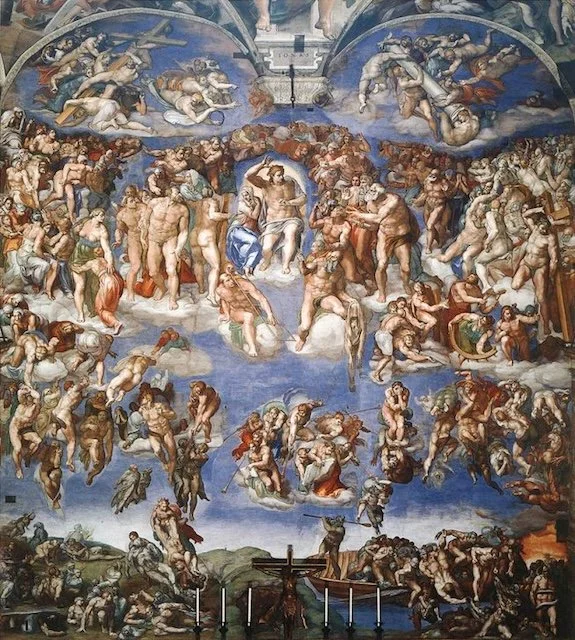
“The Last Judgment” (1536-1541). Fresco in the Sistine Chapel by Michelangelo, Public domain, via Wikimedia Commons.
Moltmann took up such questions in The Coming of God: Christian Eschatology, which appeared three decades after Theology of Hope. Like Nik Ansell, however, I don’t find his responses satisfactory. And that leaves me in a quandary. I agree with Moltmann that the final judgment is not about punishment and damnation. Rather, it is God’s putting things right and renewing all things. Yet I cannot imagine a renewed world where former tyrants and mass murderers do not truly abhor their own evil and make substantial amends.
A year after Theodor Adorno died, Max Horkheimer, his close colleague, gave a remarkable interview titled Die Sehnsucht nach dem Ganz Anderen (Longing for the Wholly Other). I’ve mentioned it before, in a blog post with the same title. In this interview Horkheimer characterized theology as “the hope that … injustice would not have the final word,” that “the murderer would not triumph over the innocent victim.” Moltmann, who was well aware of such longing for justice after the Holocaust, gave Horkheimer’s remark a surprising twist. In The Crucified God (SCM Press, 1974), p. 178, he claimed the “new righteousness” that eschatological faith envisions “says that in fact the executioners will not finally triumph over their victims. It also says that in the end the victims will not triumph over their executioners.”
I don’t know what to make of this claim. I agree that what Moltmann calls “creative justice” is about reconciliation and renewal and not about retribution and revenge. Yet the plain fact is that the executioners have already triumphed over their victims, and it’s the victims who have suffered. Surely neither oppression nor suffering can be ignored or forgotten in the final judgment.
Redemption
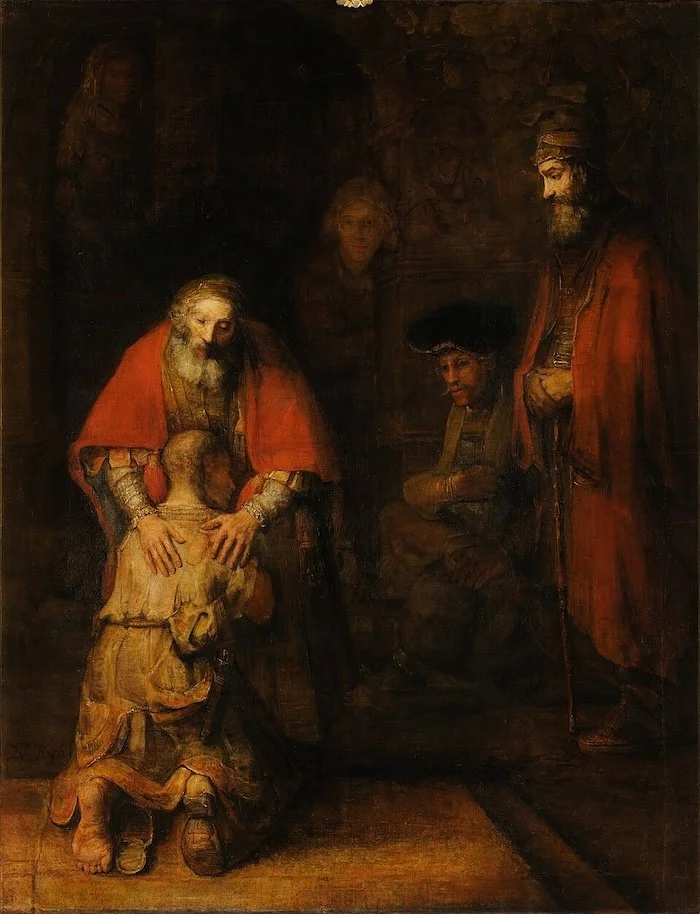
“The Return of the Prodigal Son” (ca 1668). Oil painting by Rembrandt, Public domain, via Wikimedia Commons.
My tentative response is this. Justice is a dimension of God’s love. This love is so encompassing that not even the most evil person or society can stand outside it. Yet God’s love calls for a loving response. And that includes our pursuing justice. There will be no room on the new earth for people and institutions that pursue injustice.
If they have pursued injustice in the past, however, then the final judgment will invite them to own up to this and seek forgiveness from their victims. Their victims, in turn, will be asked to forgive. But if the executioners refuse to hear the call to justice in love, there will be no place for them. They will have removed themselves from membership in a renewed and just society. The hell they created on earth will have been annihilated. They will indeed be God-forsaken.
As I said, this is my tentative response. I’m not sure what it means for how we conduct current political struggles. But I do know that hatred and revenge have no place in a just society. To the extent that traditional Christian eschatology, with its hell and damnation, feeds into such political stances, it too needs to be redeemed.
Note: I notify a list of readers when a new blog post is published. If you’re not on that list and wish to join us, please let me know via the Contact button at the top of this page.