Body, Soul, and Hope for Resurrection
Futuristic Fantasy
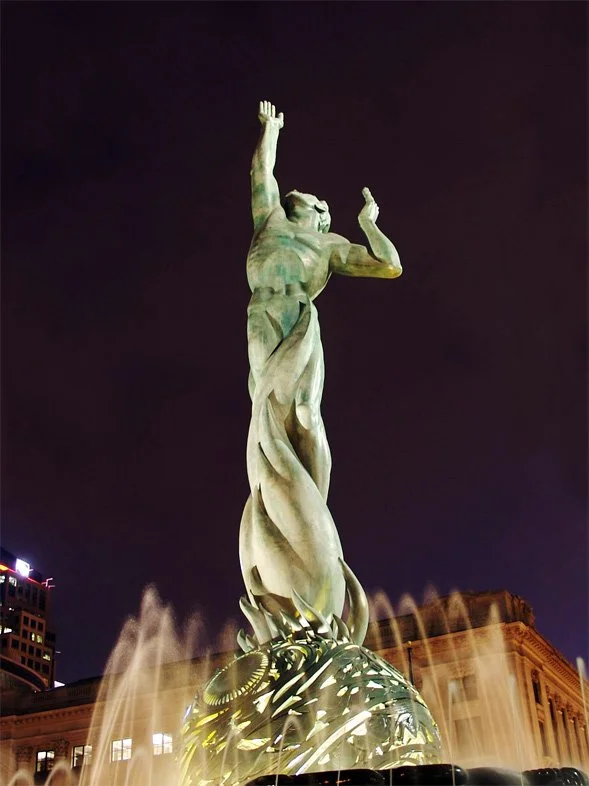
“Fountain of Eternal Life.” Image by Notwist via Wikimedia Commons
The ancient myth of an immortal soul has a new rival: the futuristic dream of an immortal body. Mark O’Connell has detailed this oligarch’s dream in a fascinating yet disturbing essay for The New York Times Magazine. He shows how powerful political autocrats such as Vladimir Putin and obscenely wealthy tech bros like Peter Thiel now fantasize about physical immortality. They’re so enamored with their own power and wealth that they’re asking the latest science and technology to grant them eternal life.
Yet it’s a futile dream, O’Connell suggests. Not even artificial superintelligence, 3-D-printed organs, and plasma transfusions from their teenaged children will save them. Instead, “the great and terrible democracy of death abides.”
The oligarchs’ futuristic but false fantasy of immortal bodies inverts Christianity’s traditional and equally misguided hope of immortal souls. Whereas pious believers have found comfort in a disembodied soul, today’s unbridled tech bros seek reassurance in a soulless body. My previous post shows why the Platonic notion of an immortal soul has no basis in the Hebrew and Greek Scriptures. Now I’d like to propose a different way to think about both body and soul. Not only do we not have immortal souls, I’ll argue, but we don’t have souls. We don’t have bodies either.
No Parts
In the post “Life, Death, and Life beyond Death,” I’ve already explained the deep theological problems with attributing immortality to our souls. The philosophical difficulties lie even deeper. For this Platonic-Christian view regards soul and body as distinct and even separate or separable parts of who we are.
Photo by Morgan Bryan on Unsplash
That’s presupposed when we say we have souls and we have bodies. Who is the “I” that “has” a soul or a body? Am I not the same as “my” soul or body? The philosophical issue here is not simply whether the soul-part is immortal and the body-part mortal. Rather, it’s a question whether these are parts or components to begin with. I would answer no.
This answer stems from reformational philosophy, in which I was trained as a student and which I later taught at the Institute for Christian Studies in Toronto. Reformational philosophy has developed an alternative to both traditional immortalism and contemporary physicalism. I call my own version of this alternative holistic pluralism. Philosophical holistic pluralism involves both an ontology (an account of the general structures and processes that make up “reality” or, better, creation) and an anthropology (an account of what it means to be human).
Monism and Dualism
One of the core ontological questions philosophers have addressed concerns “the one and the many”: How do we account for both the unity and the diversity of everything that exists? The two primary answers to this question, both of them mistaken in my view, have been the positions of ontological monism and ontological dualism.
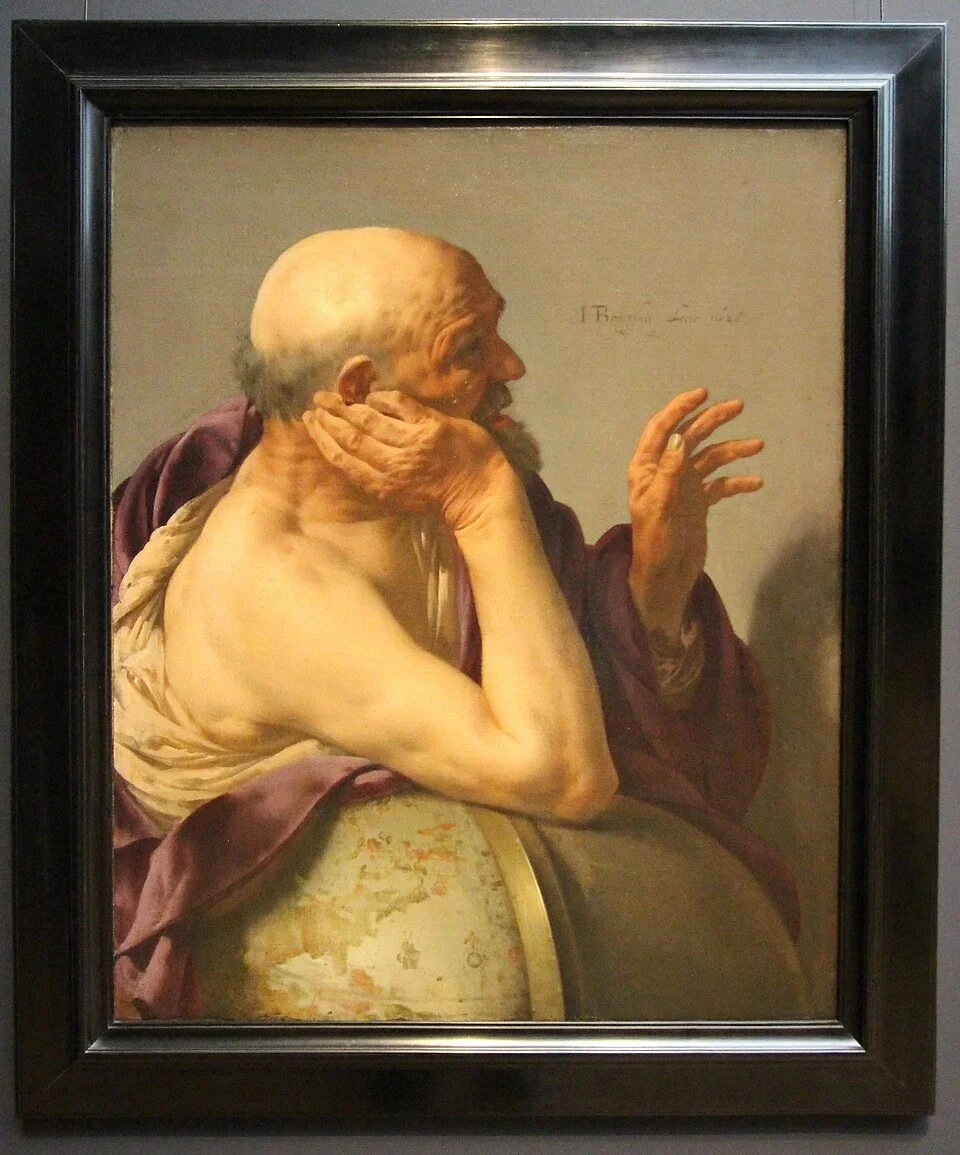
“Heraclitus.” From a painting (1628) by Hendrick ter Brugghen, via Wikimedia Commons
Monists argue that everything has a common origin. The ancient Greek philosopher Thales, for example, said everything stems from water. Heraclitus said it all comes from fire. This original unity bifurcates into two or more contrasting poles or levels of existence, usually divided into higher and lower.
The monists’ challenge is to show how these distinct poles interrelate within the overall unity, whether, for example, through interaction or influence or parallelism. Even though they distinguish various human faculties (e.g., emotion, will, and thought) and show how they interrelate, usually they don’t separate them.
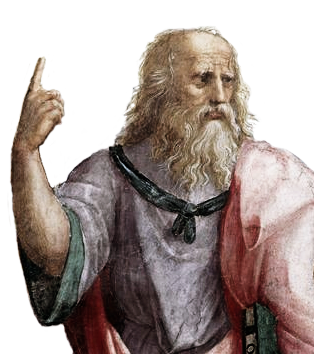
“Plato.” From the fresco “The School of Athens” (1511) by Raphael, via Wikimedia Commons
Dualists, by contrast, argue that there is no single original unity. Rather, everything belongs to either a higher or a lower reality. In his dualist writings, for example, Plato said everything is either unchanging or in flux. Aristotle said everything is made up of both (universal) form and (particular) matter.
Dualists will draw the line of separation at different levels—between physical and organic existence, for example, or between biological and psychological processes. They worry about how these levels interrelate. But they refuse to posit a deeper unity among them. Typically, ontological dualists posit two or three separate components (e.g., body, soul, and spirit) within human existence. We can say they have a dichotomy or trichotomy in their anthropology.
Holistic Pluralism
When it comes to discussions of the immortal soul, philosophers usually posit either a dichotomy between body and soul or a trichotomy among body, soul, and spirit. They regard these as components or substances that together make up the human being. How these substances interrelate is a topic of ongoing debate.
Reformational philosophers, however, refuse to enter such debates. That’s because we reject both monism and dualism in ontology and both dichotomy and trichotomy in anthropology. All of these positions fail to recognize the incredible diversity in God’s creation and in human existence. And they try to find unity or bi-unity in creation itself rather than in how creation and human existence relate to their Creator. Holistic pluralism is our alternative.
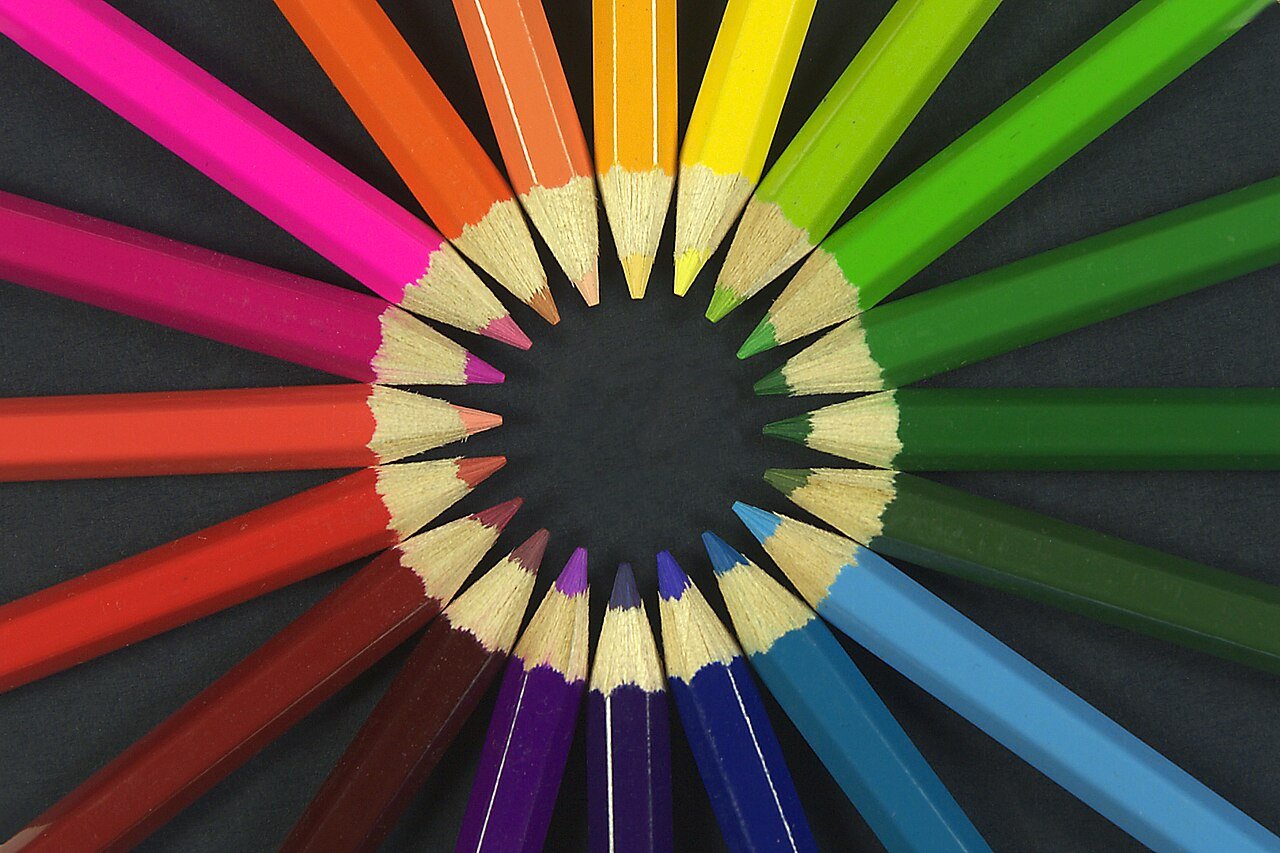
Image by MichaelMaggs, via Wikimedia Commons
For reformational philosophers, the unity of creation is to be sought not within any part or dimension or entity of creation but rather in the relation that creation as a whole sustains to its Creator. Simply put, what unifies everything is that all of it is created and upheld (and redeemable and redeemed) by God. Similarly, what unifies human existence is not any part of human existence but rather its entire relation to God.
Perhaps the biblical notion of the heart (leb, kardia) best captures this unity. It is a unity of direction and orientation. We can say human beings have a hearted relation to God—all of their activities flow from and to the stance they have toward that which they give their utmost devotion.
Against this backdrop, we can see why the notion of an immortal soul is philosophically problematic. First, it involves a dichotomy or trichotomy that reduces the many different dimensions of human existence to just a few. Second, it treats some human activities and practices as if they were permanent substances. Third, it tries to secure the continuation of human existence in one component—the immortal soul. And finally, it fails to understand that the unity of human existence does not lie within creation as such but in the relation humans have with God.
Body and Soul
Moreover, we also shouldn’t regard body and soul, whether immortal or not, as parts or components of who we are. Instead we need to distinguish between the full range of our many diverse ways of existing, on the one hand, and the unity all of these ways have through the direction our lives take. We are not simply physical and biological creatures, which is what the term “body” often signifies. There’s much more to us than that. We perceive things and have feelings. We make and imagine things; talk together and think about matters; interact with others in social, economic, and political ways; belong to families and have lovers and friends; and engage in religious and spiritual practices.
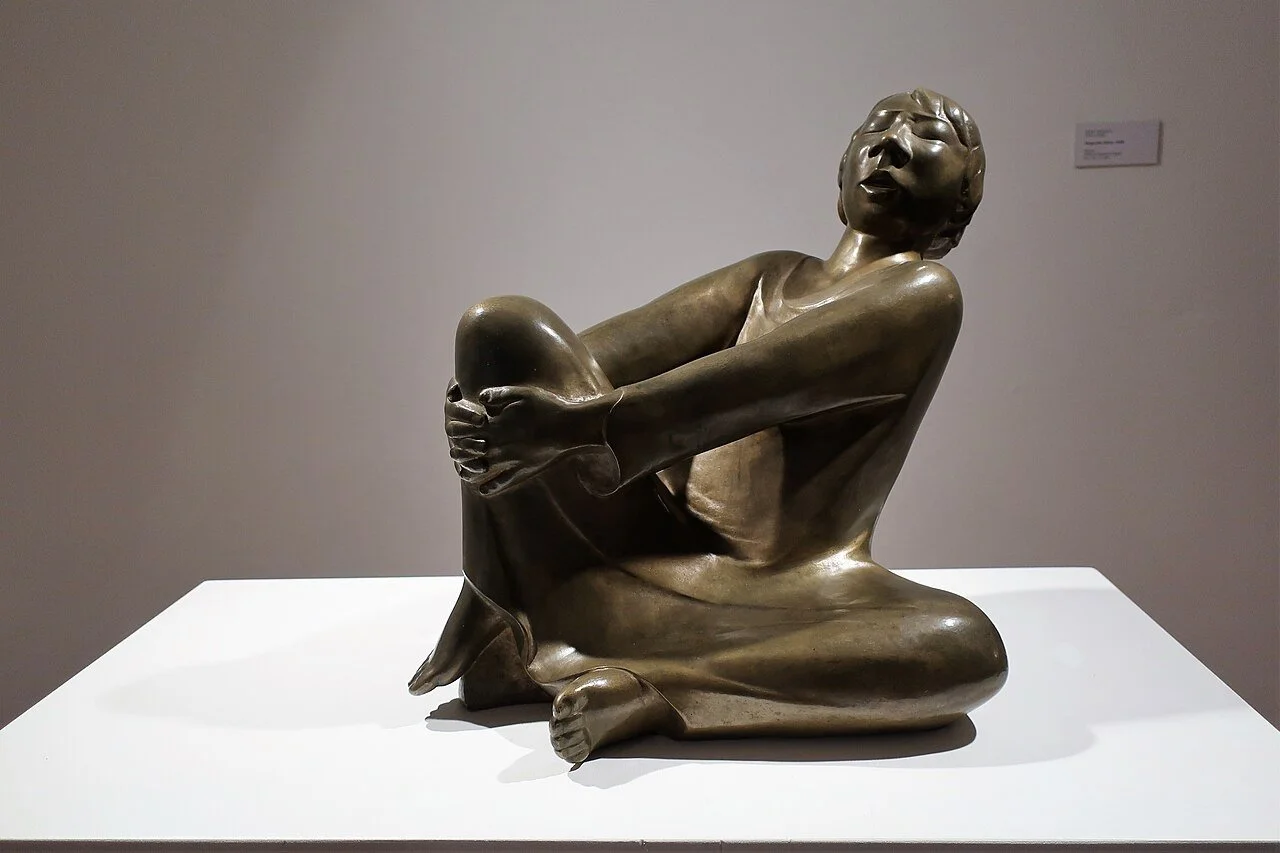
“Singender Mann” (Singing Man). Bronze sculpture (1928) by Ernst Barlach, via Wikimedia Commons
All such ways of existing make up who we are. Or better, we exist in all of these ways, in all of these activities and practices and relations. That’s who we corporeally are. And if we want to use the term “body,” that’s what we should have in mind. The body is not a component or part of us; it is all of who we are in our diverse ways of existing. We don’t have bodies. We are bodies.
Correlatively, if we want to continue talking about “soul” or “spirit,” we should not regard this as a part or component that’s distinct from “the body.” Rather we are ensouled, in this sense: In all of our organic, psychological, creative, social, and other ways of existing, we always live in orientation toward what we find matters most—whether that be the autocrat’s power or the tech bros’ wealth or, for example, the biblical promise of a new earth. We don’t have souls. We are souls: we’re always already oriented toward what should matter most.
Referring to the book Understanding Our World by my mentor Hendrik Hart, my essay “Defining Humankind” puts it like this: “the entire human being is both body and spirit, both ever corporeally engaged in diverse relations and activities and ever oriented in spirit to the origin and destiny of creation” [Zuidervaart, Religion, Truth, and Social Transformation (McGill-Queen’s UP, 2016), 217)]. We are, in our entirety, both bodily spirits and spirited bodies.
Hope for Resurrection
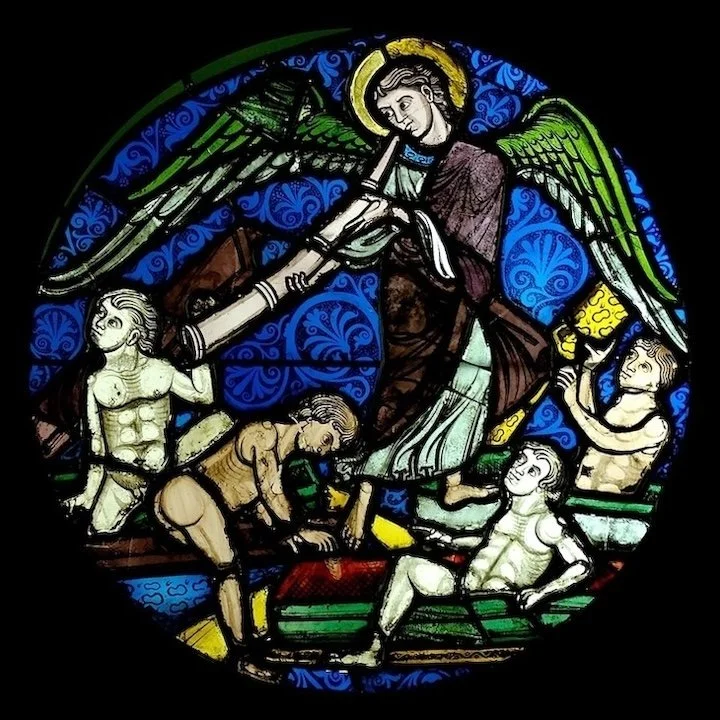
“Resurrection of the Dead.” Stained glass, region of Paris, ca. 1200. Image from Musée de Cluny, via Wikimedia Commons
Perhaps this alternative philosophical anthropology can shed new light on the traditional religious hope for “the resurrection of the body.” Historian Carol Walker Bynum’s book The Resurrection of the Body in Western Christianity, 200-1336 (Columbia UP, 1995) shows the incredible variety in images and understandings of this in pre-modern Christianity. And contemporary theologians such as Oscar Cullman (Immortality of the Soul or Resurrection of the Dead?, 1958) and N.T. Wright (Surprised by Hope, 2008) have rightly insisted that we need to connect the hope for bodily resurrection with hope for a completely transformed world, for a new heaven and a new earth where suffering ceases, justice prevails, and all creatures flourish.
Yet none of them, so far as I can tell, has sufficiently expanded the notion of body itself. If “the body” does not simply mean our physical and biological existence; if instead it refers to all of the diverse ways in which we exist, including the various activities and practices and relations in which we participate, then resurrection of the body means restoration and transformation of our existence in its entire diversity.
Hope for resurrection awaits new human life in its fullness. And hope for new life in its fullness would also expect transformed institutions in which such life can unfold—new media, for example, and new schools; new social organizations and a life-giving economy; new political institutions and new patterns of friendship and family; and indeed new ways to worship and seek spiritual connection. Renewed biological health and psychological wholeness would be included, of course. Yet, although fundamental, they aren’t the full extent of what bodily resurrection means.
Philosophically, then, we also await a resurrection of “the body.” We can no longer restrict this notion to the physical and biological dimensions of human existence and contrast it with an equally restricted “immortal soul.” Holistic pluralism calls for both notions to be transformed: both body and soul.
Note: I notify a list of readers when a new blog post is published. If you’re not on that list and wish to join us, please let me know via the Contact button at the top of this page.