James Talarico and a Politics of Love
A few days ago New York Times columnist Ezra Klein posted a remarkable podcast interview with State Representative James Talarico of Texas. Just 36 years old and already seeking a seat in the United States Senate, Talarico stands out as a Democrat who doesn’t hesitate to root his politics in his Christian faith. The interview is long—nearly 1.5 hours—but it merits our attention. Here’s a link to the edited transcript. There you can also find a link to the podcast version.
Politics of Love
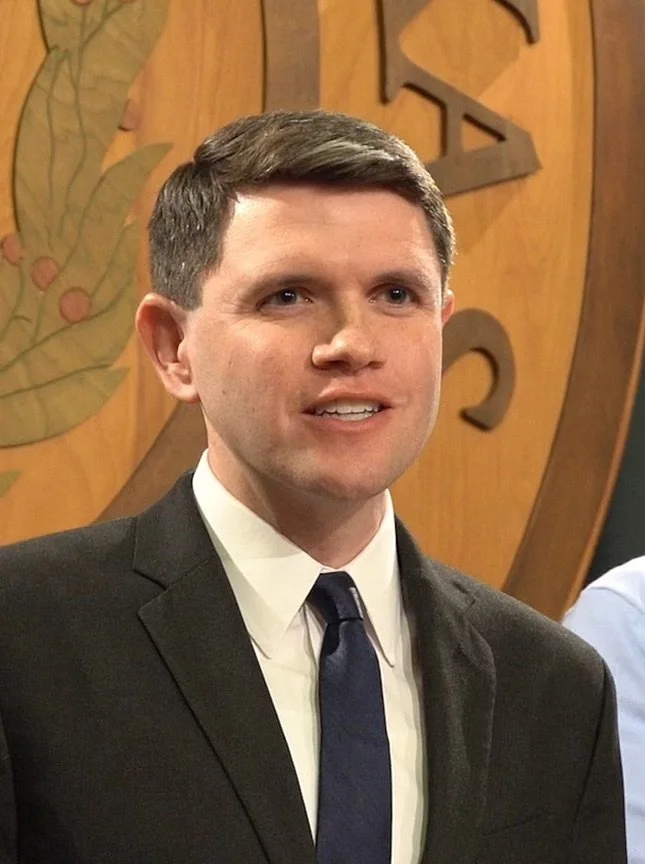
James Talarico in a press conference at the Texas Capitol, January 13, 2025. Photo by Antonioaesparza, via Wikimedia Commons
Talarico is a mainline Presbyterian. In fact, while serving in the Texas House of Representatives, he has been pursuing a Master of Divinity degree at Austin Presbyterian Theological Seminary. In this interview, however, and in others like it, he does not employ the usual Reformed or Presbyterian language to explain what his faith means and how it informs his politics.
Instead he goes back to what his maternal grandfather, a Baptist preacher, told him when he was small: “Christianity is a simple religion—not an easy religion, he would always clarify, but a simple religion—because Jesus gave us these two Commandments: To love God, our source, and to love our neighbors.” Everything Talarico thinks about faith and politics flows from this simple but not easy source.
Much in what Talarico says addresses the current moment in American politics: That faith is a matter of having trust rather than believing in a statement or idea, a view I’ve emphasized in a blog post titled True Religion? That the separation of church and state is crucial for religion itself: without it, religious institutions cozy up with political power and lose their prophetic voice, a point Talarico also elaborated a few months ago in a shorter interview with Heather Cox Richardson. That, like Christianity, different religious traditions—Buddhism, Hinduism, Islam, Judaism—all circle “the same truth” which is “inherently a mystery.” That Christian white nationalism, which Adorno scholar Martin Shuster has recently diagnosed as the “de facto ideology” of the contemporary Republican Party, is “the worship of power in the name of Christ,” and as such it is fundamentally anti-Christian. It is, as Talarico claimed in a gripping sermon to his home church in October 2023, “a cancer” on the Christian religion—here’s a YouTube link to this sermon.
But what really hit me when I heard the interview with Ezra Klein is how Talarico forthrightly calls for what he labels a “politics of love.” And he thinks Americans “are ready for it.” This would be “a love not just for the state of Texas or for this country, but a love for our neighbors. A radical love. Especially for our neighbors who are the most different from us. That kind of politics,” he believes, “could transform this country.”
Naïveté?
At first this can sound incredibly naïve. So, not surprisingly, Klein pushes Talarico to explain: Have you ever seen such a politics “in the real world?” How would you put this into practice with your enemies? Would it really make a political difference? What does a politics of love actually mean? To Talarico’s credit, he does not shy away from these questions; he addresses them head on.
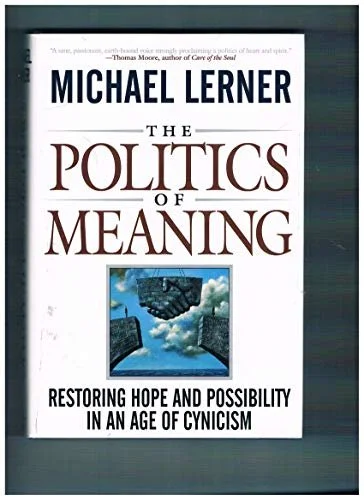
I don’t plan to summarize Talarico responses; you can read or listen to them for yourself. Instead I’d like to reflect on why the phrase “politics of love” is not so naïve as it might first sound—just as, in the early 1990s, the “politics of meaning” promoted by Tikkun editor Rabbi Michael Lerner and temporarily embraced by Hillary Clinton, was not as simplistic or unrealistic as its critics claimed.
To begin, let me recall what I’ve said previously about politics and truth. Then I’ll explore the meaning of “love” and argue that true politics will be a politics of love.
Politics and Truth
Last month’s blog post titled Justice, Freedom, and Power: The Truth of Politics describes politics as being both a power struggle for the sake of justice and a justice struggle based on legitimate power. I also claim that politics is a social domain of truth, in the following sense. It is the arena where we can be faithful to the societal principle of justice while seeking to free people and other creatures from oppression, doing all of this through a justifiable exercise of power.
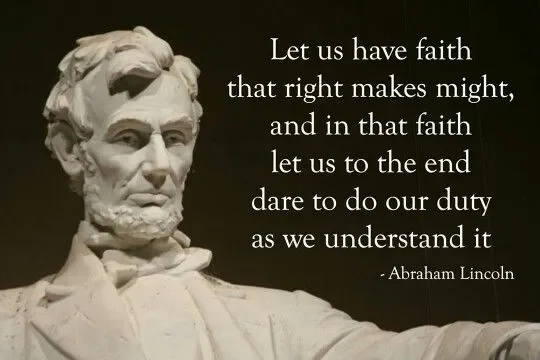
This description suggests three ways in which politics can go wrong, three ways to practice political untruth. We can turn the pursuit of justice into a brute display of force, as captured in the slogan “might makes right.” We can refuse to justify whatever political power we seek or have. And we can pursue the liberation of some at the expense of others, turning so-called freedom into oppression.
In my view, Christian white nationalism, as promoted and enacted by the current Trump administration, practices all three forms of political untruth. It reduces justice to power; it refuses to justify political power; and it tries to “free” some by oppressing many. This is the context where Talarico proposes his politics of love and where I argue that true politics will be one of love.
Love and Justice

If this sounds strange, perhaps that’s because the West has a long history of thinking love and justice are at odds with one another. If politics is fundamentally an empowered pursuit of justice for the sake of liberation, then how can there be a politics of love? My colleague Nicholas Wolterstorff has eloquently demonstrated the problems with pitting love against justice. His book Justice in Love (Eerdmans, 2011) shows the complex unity between them. It’s well worth reading in the current context.
My approach, however, is a little different. I want to explore the meaning of “love” in the double calling that grounds Talarico’s politics: love God above all and love your neighbor as yourself. Although uniquely articulated in the Hebrew scriptures and rearticulated by Jesus, one can also find versions of this injunction in other world religions. What does such love mean?
Obviously, we’re not talking about romantic love of the sort both celebrated and questioned in popular culture. We’re also not looking at interpersonal love of the sort discussed in my blog posts on friendship and marriage. Nor do we have in mind the less personal sort of love that characterizes patriotism and fandom.
No, what we’re dealing with, as Talarico recognizes, is a calling that addresses all of life and knows no exception. To love God above all is to try to lead our entire lives, including our politics, along the pathways of God’s presence. To love our neighbor as ourselves is continually to seek their wellbeing just as we seek our own. And, as Jesus’s parable of the Good Samaritan and Talarico’s comments about it make obvious, our neighbor is not simply people like us or the people we hang out with. It is especially people on the margins and in need, including those who suffer injustice and are oppressed.
Double Calling

Point Reyes National Seashore, Inverness, CA. Photo by Leo Visions on Unsplash
But what does it mean to lead entire lives along the pathways of God’s presence? Here’s how I understand this. There are fundamental ways in which God’s love for creation show up in human life. Whether we acknowledge this or not, we need to find these ways and give them shape. This happens when we form collective expectations about what makes for goodness in human life. I call such expectations societal principles—principles such as justice, solidarity, and stewardship—and I see them as our ongoing responses in society to how God’s love for creation shows up.
This means the double calling to love God and love neighbor surfaces in our societal principles. Moreover, being faithful to these principles—trying to do justice, to show respect for others, and to take care of the Earth, for example—is our proper response to the double love-calling. That’s how we can live along the pathways of God’s presence and continually seek the wellbeing of others. When we do this, we can contribute to the interconnected flourishing of all creatures: their liberation from oppression, for example, or the restoration of their dignity, or the preservation of their lives.
That, then, is how I understand the politics of love. It’s a politics that pursues justice for the sake of liberation and does not exclude anyone from the divine calling to love that shows up in human endeavors. True politics will be a politics of love. As Talarico’s grandpa recognized, it’s really quite simple. But it isn’t easy. And it is unavoidably at odds with the false politics of hatred and resentment that currently calls itself Christian.
Note: I notify a list of readers when a new blog post is published. If you’re not on that list and wish to join us, please let me know via the Contact button at the top of this page.