Unflinching Gaze
How do we unblinkingly look evil in the eye? According to Texas Senator-elect James Talarico, whose victory speech prompted my previous post, that’s what a “politics of love” requires. But how do we do this? Also, what sort of evil do citizens and their leaders need to stare down? To use distinctions I introduced in “This Is So Wrong,” do we need to focus on natural evil (e.g., forest fires)? Moral evil (e.g., murder)? Or what I call societal evil?

Photo by Joyce G on Unsplash
In a political context, when we speak of evil we tend to limit its scope to what individuals or specific groups do or pursue. It’s something we blame on the other political party, for example, or locate in a corrupt administration. As a result, we expect a significant election, like the Democrats’ recent tidal wave in the United States, to make things right again (or, if you’re of a different political persuasion, to send the country to hell in a handbasket). Such a huge victory represents a “clean sweep,” we say. It will “drain the swamp.”
Yet we know some forces of evil are more complex and powerful than this. A single election, no matter how astonishing the results, will not defeat them. That’s why citizens and politicians alike need to grapple with the reality of societal evil. In the long run, this is what we need to stare in the eye. The question is, How?
Addressing Genocide
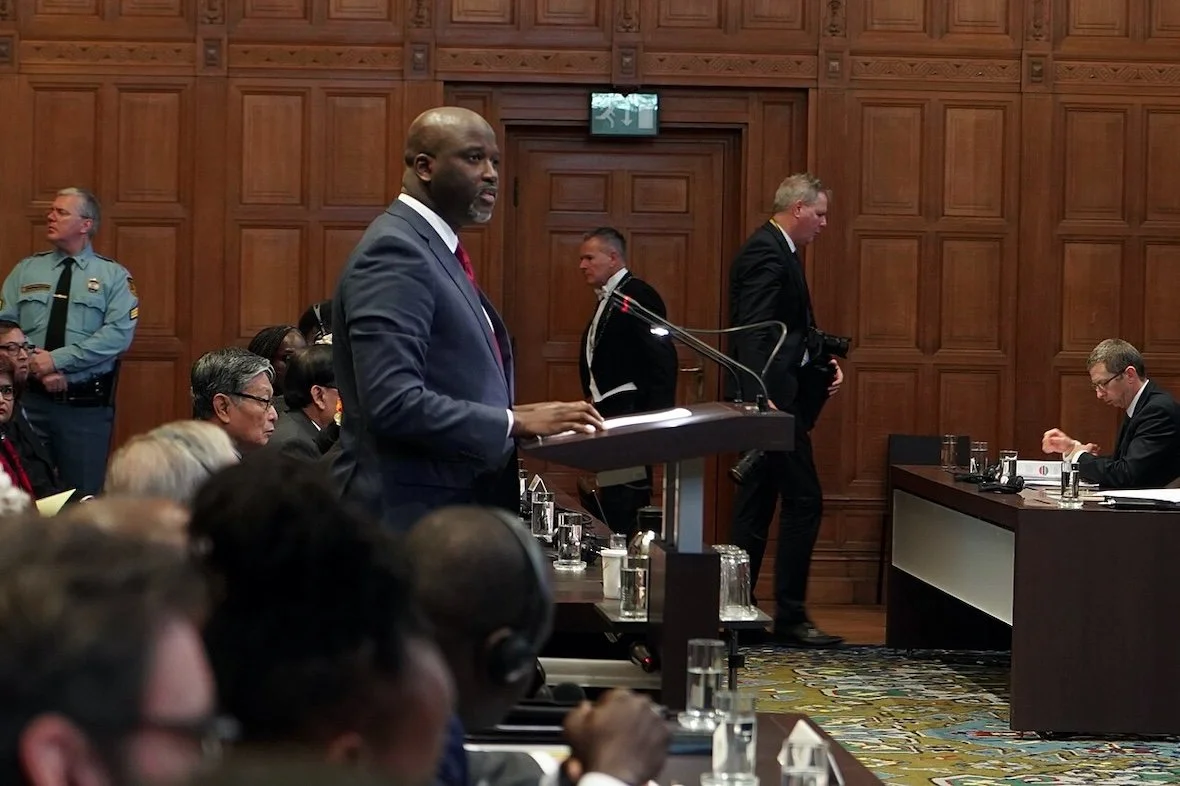
Gambia's Justice Minister Abubacarr Tambadou presents the genocide case against Myanmar at the International Court of Justice in 2019. Photo by Shafiur Rahman, CC BY-SA 4.0, via Wikimedia Commons.
Last week, for the first time since the United Nations adopted the Convention on the Prevention and Punishment of the Crime of Genocide in 1948, the International Court of Justice found a country responsible for genocide. Previous cases had declared only individuals or particular groups—not an entire country—guilty of this crime. Based on both gruesome testimony and detailed factual reports, the court ruled that in 2017 Myanmar, through its security forces, had committed genocide. The country undeniably engaged in a pattern of conduct intended to destroy the minority Muslim Rohingya people in one of Myanmar’s northern states.
As lawyer Philippe Sands explains in a lucid essay for The New York Times, this represents a big step forward in holding governments accountable for horrific and collective crimes. In my view, it also gives substance to what Theodor Adorno, writing in the aftermath of Auschwitz, called “a new categorical imperative.” Now, Adorno said, human beings are morally obligated to arrange our thoughts and actions in such a way that nothing similar to Auschwitz happens again. International conventions, courts, and proceedings are crucial to such arrangements. (I discuss Adorno’s idea in my book Social Philosophy after Adorno, pp. 178-181.)
Indeed, adopting international conventions about genocide, war crimes, and crimes against humanity, and prosecuting apparent cases, are how we can look such evil in the eye. For, as the recent ruling against Myanmar makes clear, intentional destruction of a national, ethnic, racial, or religious minority, whether in whole or in part, is not simply a moral failure for which we can blame particular individuals and specific groups. It is a societal evil for which we need to call out entire institutions and social structures.
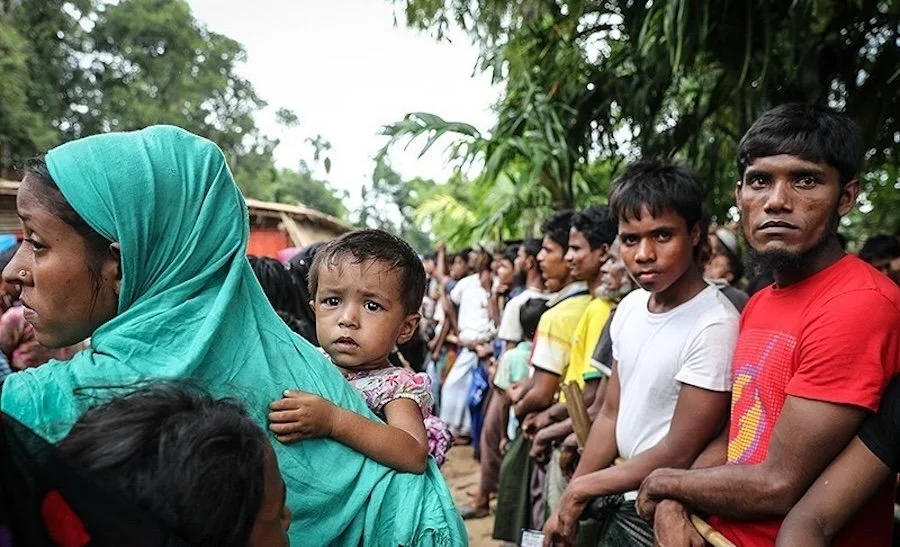
Rohingyas at the Kutupalong refugee camp in Bangladesh, October 2017.Photo by Tasnim News Agency, CC BY 4.0, via Wikimedia Commons.
Convicting Myanmar of genocide does not remove the suffering of its victims. Their lives have been lost and shattered, as a recent New York Times photo essay documents. More than a million Rohingya refugees struggle to survive at crowded camps in neighboring Bangladesh. Yet the international court conviction does give legal voice to a deep intuition: their suffering should never have happened—and nothing like it should ever happen again. Genocide is not only a crime. It is a societal evil.
Global Systems
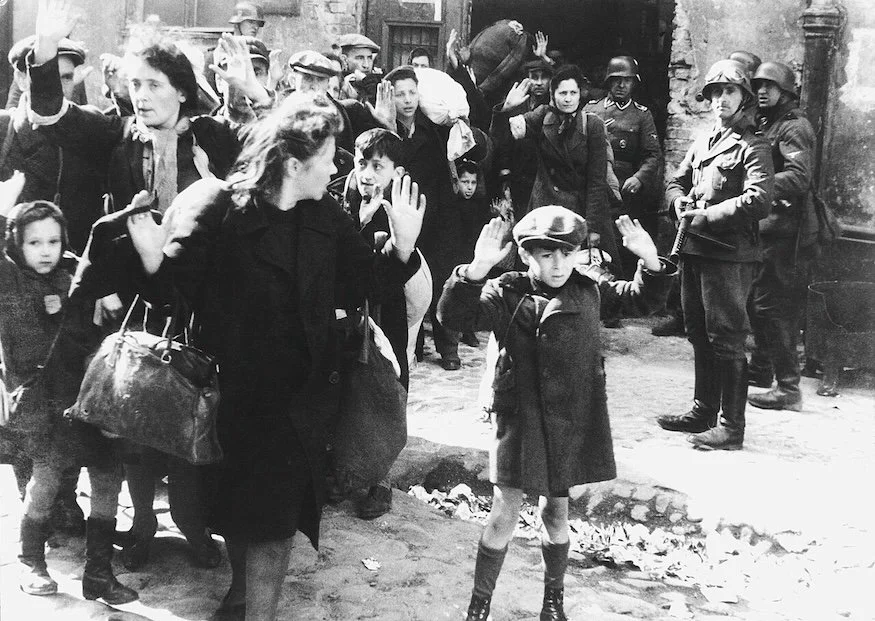
“Warsaw Ghetto Uprising,” from the Jürgen Stroop Report to Heinrich Himmler, May 1943. Image from National Archives and Records Administration, Public domain, via Wikimedia Commons.
It’s hard for outsiders to understand what motivates a societal evil like genocide. Why did the Nazis systematically slaughter nearly six million Jews during World War Two? Why did Myanmar’s government troops go on a rampage in 2017, destroying 400 Rohingya villages, killing defenseless children, executing men and boys, and engaging in mass rape? Such large-scale depravity is hard to understand. Yet we don’t regard these as anonymous crimes. They had actual perpetrators, and we want to hold the perpetrators to account.
Not all societal evils are like this, however. Some are more global and systemic. That makes them even more difficult to recognize and resist. Here I have two society-wide tendencies in mind: ongoing ecological destruction and growing economic inequality. Both tendencies pose the problem raised in my previous post on natural, moral, and societal evil. On the one hand, ecological destruction and economic inequality are so global that it’s hard to hold anyone responsible for them. On the other hand, both are so destructive that everyone seems responsible. In these cases, there’s a tension in the concept of societal evil between its scope and its meaning.
Subsequent blog posts will take up each topic in turn, first economic inequality and then ecological destruction. Given the tension just noted, how do we look such global and systemic societal evils in the eye?
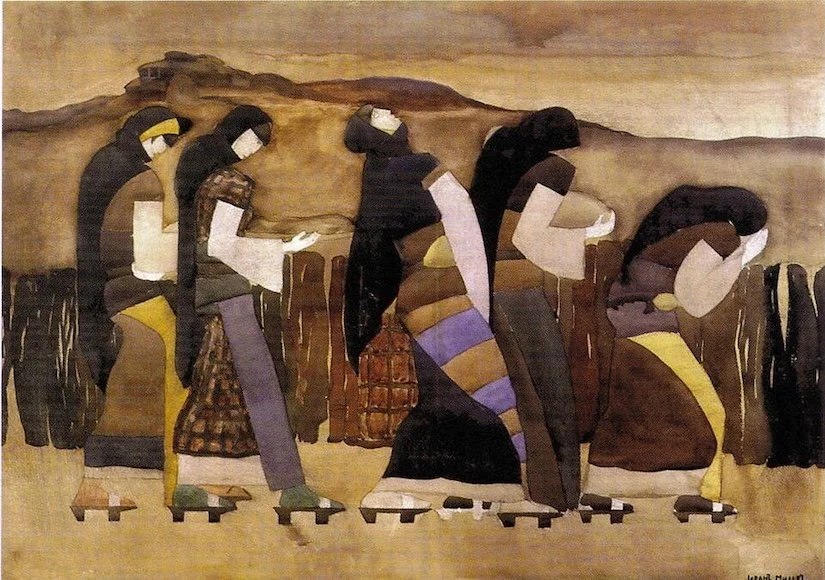
''Our Mothers Are Always Dressed in Black” (1926). Painting by Ivan Milev, Public domain, via Wikimedia Commons
For now, let me acknowledge just how overwhelming the daily litany of political disasters can be. One can quickly swing from the euphoria of an electoral blue wave to exhaustion with Donald Trump’s authoritarian antics and despair over the collapse of COP31 climate talks. I don’t intend my reflections on societal evil to add to our exhaustion and despair. By facing up to what’s deeply wrong in today’s society, we can also envision how to help set things right. Looking societal evil in the eye is a sign of critical social hope.
Note: I notify a list of readers when a new blog post is published. If you want to join us, please let me know via the Contact button at the top of this page.